

Latest news
A molecular ‘switch’ alters the state of a key protein in leukaemia
A team from the University of Seville, affiliated with the Institute of Chemical Research, has discovered how small chemical modifications can alter the structure and localisation of the NPM1 protein, which is implicated in around 30 per cent of cases of acute myeloid leukaemia.
Acute myeloid leukaemia (AML) is a particularly aggressive form of blood cancer with a high mortality rate, especially amongst older people. The five-year survival rate is around 30 per cent for patients as a whole and falls below 10 per cent among those over 60. One of the most common genetic changes in this disease affects the nucleophosmin (NPM1) gene, a protein essential for cell function which is mutated in around 30 per cent of AML cases.
Now, a team from the Biointeractomics group, led by Professor Irene Díaz Moreno, has identified a molecular mechanism that helps explain how NPM1 changes its behaviour within the cell. The study shows that certain chemical modifications, known as phosphorylations, can act as a veritable ‘switch’: they alter the protein’s structure and facilitate its movement between different cellular compartments.
The findings, recently published in the international journal *Proceedings of the National Academy of Sciences* (PNAS), show that these modifications affect the electrical charges of NPM1. As a result, the protein loses part of its ordered structure, adopts a more flexible and dynamic state, and changes the way it interacts with other molecules. This may make it easier for it to leave the nucleolus, a region of the cell nucleus where it is normally concentrated.
A protein that changes state in response to cellular damage
Under normal conditions, NPM1 is mainly localised in the nucleolus and plays a role in functions essential to the cell, such as ribosome production and the maintenance of nuclear organisation. However, when the cell undergoes stress or DNA damage, this protein can be redistributed across different cellular compartments and contribute to the response to these disturbances.
“Post-translational modifications such as phosphorylation events rewrite the molecular landscape of proteins. By reshaping the charge, they reshape the dynamics; by reshaping the dynamics, they reshape the interactions; and by reshaping the interactions, they regulate transitions from order to disorder, as well as condensation properties,” explains Irene Díaz Moreno. “Thus, post-translational regulation in NPM1 provides a molecular mechanism for modulating its plasticity and navigating the continuum of functional states in order to respond to the cell’s needs when its DNA is damaged.”
A new piece of the puzzle in understanding leukaemia
The finding is particularly significant in the context of acute myeloid leukaemia, as NPM1 is one of the genes that mutates most frequently in this disease. These mutations can alter the protein’s localisation and the interactions it forms within the cell, contributing to the process of leukaemic transformation.
Understanding how chemical modifications control the structure and behaviour of NPM1 thus adds a new piece to the puzzle of understanding the disease. The study helps to explain how this protein integrates signals of stress and DNA damage, and how disruption of this regulatory system may contribute to the development of leukaemia.
The findings also open up new avenues for studying the role of NPM1 in AML and, in the longer term, for exploring potential strategies targeting the mechanisms that regulate its behaviour within the cell.
Reference: Giner-Arroyo RL, Velázquez-Campoy A, De la Rosa MA, Díaz-Moreno I. Tyrosine phosphorylation unfolds nucleophosmin and disrupts its integration into the nucleolus. Proc Natl Acad Sci U S A. 2026;123(41):e2533263123. doi:10.1073/pnas.2533263123
Irene Díaz-Moreno, new founding member of the FEBS Research Academy
Among its 100 founding members, Professor Irene Díaz-Moreno, a researcher at the University of Seville affiliated with the Institute of Chemical Research (IIQ), has been selected as a full member. This appointment represents a significant international recognition of her research career and her contributions to the fields of biochemistry and molecular biology.
The Academy’s founding members were selected by its electoral committee and subsequently confirmed by the FEBS Council. The institution brings together researchers from 24 countries and counts 28 Nobel laureates amongst its founding members. This highlights the high scientific standard and international scope of this initiative.
Alongside Irene Díaz-Moreno, three other researchers affiliated with the Spanish Society of Biochemistry and Molecular Biology (SEBBM) have been elected to the Academy: Mariano Barbacid, as an honorary member, and Ángela Nieto and Alfonso Valencia, as full members.
Irene Díaz-Moreno’s induction recognises her outstanding scientific work and helps to strengthen the presence of Spanish research on the international scientific stage.
The FEBS Research Academy was established with the aim of promoting scientific excellence and innovation, fostering international and interdisciplinary collaboration, supporting the development of new generations of researchers and contributing, through scientific knowledge, to addressing society’s major challenges.
The official launch of the Academy will take place during the FEBS Congress 2027, to be held in Riga (Latvia) from 3 to 7 July.
2026 Nobel Prize in Chemistry: ‘At last, Kagan’, by Noureddine Khiar
2026 Nobel Prize in Chemistry. (Nobel Prize)
By Noureddine Khiar, principal investigator of the Asymmetric Synthesis and Functional Nanosystems group
The Royal Swedish Academy of Sciences has awarded the 2026 Nobel Prize in Chemistry to Henri B. Kagan and Kenso Soai for their work on non-linear effects and autocatalysis in asymmetric organic synthesis, discoveries which helped to explain how a small molecular asymmetry can be amplified to the point of generating systems dominated by just one of the two possible mirror images of a molecule—that is, by a single enantiomer.
For many chemists, the announcement also had an immediate implication: at last, Kagan. His name had been omitted from the 2001 Nobel Prize in Chemistry, which was awarded to William Knowles, Ryoji Noyori and Barry Sharpless for the development of asymmetric catalysis. Since then, numerous researchers have considered that Kagan, a key pioneer in the field, deserved to have been among the laureates of that year’s prize. Kagan was one of the great architects of modern asymmetric synthesis. In 1971, he developed DIOP, a chiral bidentate diphosphine with C₂ symmetry, which helped to establish a fundamental principle: the symmetry and three-dimensional geometry of a ligand could be designed to control which enantiomer a reaction produces. This concept was to have an enormous influence on the subsequent development of chiral ligands and modern asymmetric catalysis. His scientific career was, however, much broader in scope. His numerous contributions also include the asymmetric synthesis of chiral sulphoxides and the introduction of samarium(II) iodide, SmI₂, known as the Kagan reagent, which would become a fundamental tool for reductions, radical cyclisations and the formation of carbon–carbon bonds.
But his decisive contribution to the 2026 Nobel Prize came in 1986, when he demonstrated the so-called non-linear effects: a small difference in the enantiomeric composition of a catalyst can result in a much greater difference in the product. Chemistry, therefore, can amplify asymmetry. Until then, it had been assumed almost intuitively that the enantiomeric purity of the product must vary in proportion to that of the catalyst. Kagan’s experiments showed that the relationship could be far more complex and, under certain conditions, lead to a very marked amplification of chirality. Kenso Soai took this principle even further. In 1995, he described an asymmetric autocatalytic reaction in which the chiral product itself catalyses its own formation. A slight initial advantage of one of the enantiomers progressively generates more molecules of that same configuration, amplifying the imbalance. The significance of these discoveries extends far beyond organic synthesis. Life exhibits an extraordinary characteristic: its main biological molecules show a strong preference for one of their two chiral forms. The amino acids that make up proteins belong almost exclusively to the L series, whilst the sugars present in DNA and RNA belong to the D series. This property, known as homochirality, is essential for the functioning of biological systems. Kagan and Soai’s work does not definitively explain how this preference arose on the early Earth, but it did demonstrate something fundamental: an initially minuscule asymmetry can be amplified, through purely chemical processes, to the point of generating a system dominated almost entirely by a single chiral form. That is why the 2026 Nobel Prize links chemists’ ability to control the three-dimensional structure of molecules to one of the great questions about the origin of life: how could such a marked preference for one of the two possible forms of chiral molecules have arisen?
And, after decades of influence on catalysis, stereochemistry and modern organic synthesis, the announcement also carries a particularly simple significance: At last, Kagan.
The IIQ is offering seven posts as part of the call for applications for R+D+I Support and Management Technicians – Andalusia 2025
Interested candidates must meet a series of general requirements and, in certain cases, specific requirements relating to each of the posts on offer.
Eligibility criteria
The conditions set out in the call for applications include the following:
- Hold a university degree in arts, engineering, architecture or a relevant field. In the case of foreign qualifications, the relevant accreditation certificate must be provided. In the case of vocational training qualifications, hold a technician or senior technician qualification.
- Where specified for a particular post, meet the requirements regarding specific training, languages or other academic merits relevant to the post.
- Be at least 16 years of age at the time of submitting the application and under 30 years of age on the date the contract is signed.
- Be unemployed and registered as a jobseeker with the relevant Public Employment Service.
- Have no work experience as a holder of a higher qualification on the day prior to the signing of the contract. For these purposes, work experience as a holder of a higher qualification is defined as that carried out in contribution groups 1 and 2. Curricular and extracurricular work placements listed as such in one’s employment history are not considered work experience for these purposes.
- Meet the nationality and residence requirements set out in the call for applications.
- Possess the necessary functional capacity to carry out the duties associated with the post.
- Not have been dismissed from the service of any public administration following disciplinary proceedings, nor be disqualified from holding public office or positions.
This call for applications offers young graduates the opportunity to join the research community and gain professional experience at a specialist centre, whilst contributing to the development of the IIQ’s technical and research support activities.
Vacancies at the IIQ
The IIQ has advertised seven vacancies for Senior Technicians in the Manufacture of Pharmaceutical, Biotechnological and Related Products. The duties involved in each role are detailed below.
– Technical support staff for the Asymmetric Synthesis and Functional Nanosystems group (Ref. TAA2025_098_IIQ_M1)
- Medium- and large-scale synthesis of raw materials, intermediates and final compounds
- Scaling up and optimisation of bioactive compounds and structural analogues
- Systematic quality and purity control of compounds using thin-layer chromatography
- Purification of products using column chromatography, crystallisation and distillation
- Structural characterisation of synthesised compounds using spectroscopic techniques (NMR, IR, UV-Vis and polarimetry)
- Recording, documentation and ensuring the traceability of samples and associated analytical data
- Incorporation and management of compounds in the QCSIC Chem library database
- Preparation of plates and samples for biological screening assays, in coordination with IBIS
- Preparation of periodic technical reports monitoring the activities carried out
– Technical support staff for the Organometallic Molecule Design and Applications group (Ref. TAA2025_099_IIQ_M1)
- Optimisation and standardisation of procedures to improve the efficiency and sustainability of research
- The successful candidate will carry out technical support and management tasks for the DOGMA group’s research areas, contributing to the implementation of current R&D&I projects and the development of new proposals
- Technical support for experimental work, including the preparation of materials, the use and maintenance of scientific equipment, and the management of experimental data
- Administrative and financial management of research projects: monitoring milestones and justifying expenditure
- Support for the dissemination and transfer of results through the preparation of technical documentation, support for scientific publications and outreach activities
– Technical staff providing structural and functional support for proteins, including operational management of the Biointeractomics laboratory (Ref. TAA2025_100_IIQ_M1)
- Experimental Support: Preparation and preservation of biological samples (proteins and macromolecular complexes) for structural (NMR) and biophysical studies. Use of biochemistry and molecular biology techniques to study protein-protein/nucleic acid interactions, disordered proteins and post-translational modifications (phosphorylation, acetylation, etc.)
- Operational Management: Organisation of the laboratory’s day-to-day running, stock control and order management. Maintenance of scientific equipment and supervision of compliance with safety regulations and good practice
- R&D&I Management: Technical and administrative support for project documentation, data collection for scientific reports and technical coordination with scientific platforms, general services and collaborating groups
– Technical R&D staff in the ‘Organometallic Synthesis and Catalytic Applications’ research group (Ref. TAA2025_101_IIQ_M1)
- Synthesis and Purification: Preparation of organic/organometallic compounds under inert atmosphere conditions. Application of transfer techniques (cannula, syringes), purification by chromatography (column and TLC), crystallisation and management of anhydrous solvents
- Characterisation and Analysis: Preparation and acquisition of NMR (¹H, ¹³C, ³¹P) and IR spectra. Monitoring of reactions and quantitative analysis using GC and HPLC, including calibration curves and kinetic data processing
- Reactions with Gases: Safe operation of pressurised reactors and handling of gas cylinders (H₂, CO, CO₂). Design and maintenance of pressurised systems under safe conditions
- Document Management: Literature searches in specialised databases, patent searches and reference management
– Technical staff in the Glycosystems Laboratory research group (Ref. TAA2025_102_IIQ_M1)
- Synthesis: Preparation of organic molecules (carbohydrates) and functionalised dendrimers using established protocols. Monitoring of reactions via TLC and HPLC (peptides/proteins)
- Purification and Characterisation: Isolation of compounds via silica gel chromatography, size exclusion chromatography, membrane filtration or HPLC. Structural characterisation via NMR and mass spectrometry
- Laboratory Management and Maintenance: Overseeing safety procedures, solvent purification, stock control, procurement management (reagents/equipment) and equipment maintenance
- Technical Documentation: Preparation of reports and a final report detailing experimental procedures, product characterisation and bibliographical references to ensure the traceability and reproducibility of results
– Technical staff in the research group ‘Development of catalysts for processes of industrial interest’ (Ref. TAA2025_103_IIQ_M1)
- Health and Safety: Overseeing health and safety, preventive maintenance of scientific equipment and replacement of materials
- Reagent and Solvent Management: Purification of solvents (continuous distillation), quality control of starting materials, advanced inventory management and database updates
- Critical Equipment: Technical lead and manager responsible for the use of the glovebox, acting as the point of reference for this and other laboratory instruments
- Logistics: Management of material resources and the storeroom to ensure the efficiency and continuity of research programmes
– Technical staff in the ‘Biomolecular Interactions and Structural Glycobiology’ research group (Ref. TAA2025_104_IIQ_M1)
- Computational Chemistry: Performing molecular docking and molecular dynamics simulations. Calculating spectroscopic properties and analysing interaction energies to determine bioactive conformations
- Artificial Intelligence: Managing generative deep learning models for protein-ligand co-folding. Applying machine learning to predict properties and programming code for data analysis
- Structural Biology and NMR: Protein expression in E. coli and purification via FPLC. Screening of chemothèques and study of interactions using advanced NMR techniques (STD, 19F CPMG, SHARPER and tr-NOESY)
- Analysis and Management: Data processing using Python and specialised software. Validation of computational models against experimental results and data maintenance
JAE PRE/MED pre-doctoral contract offer
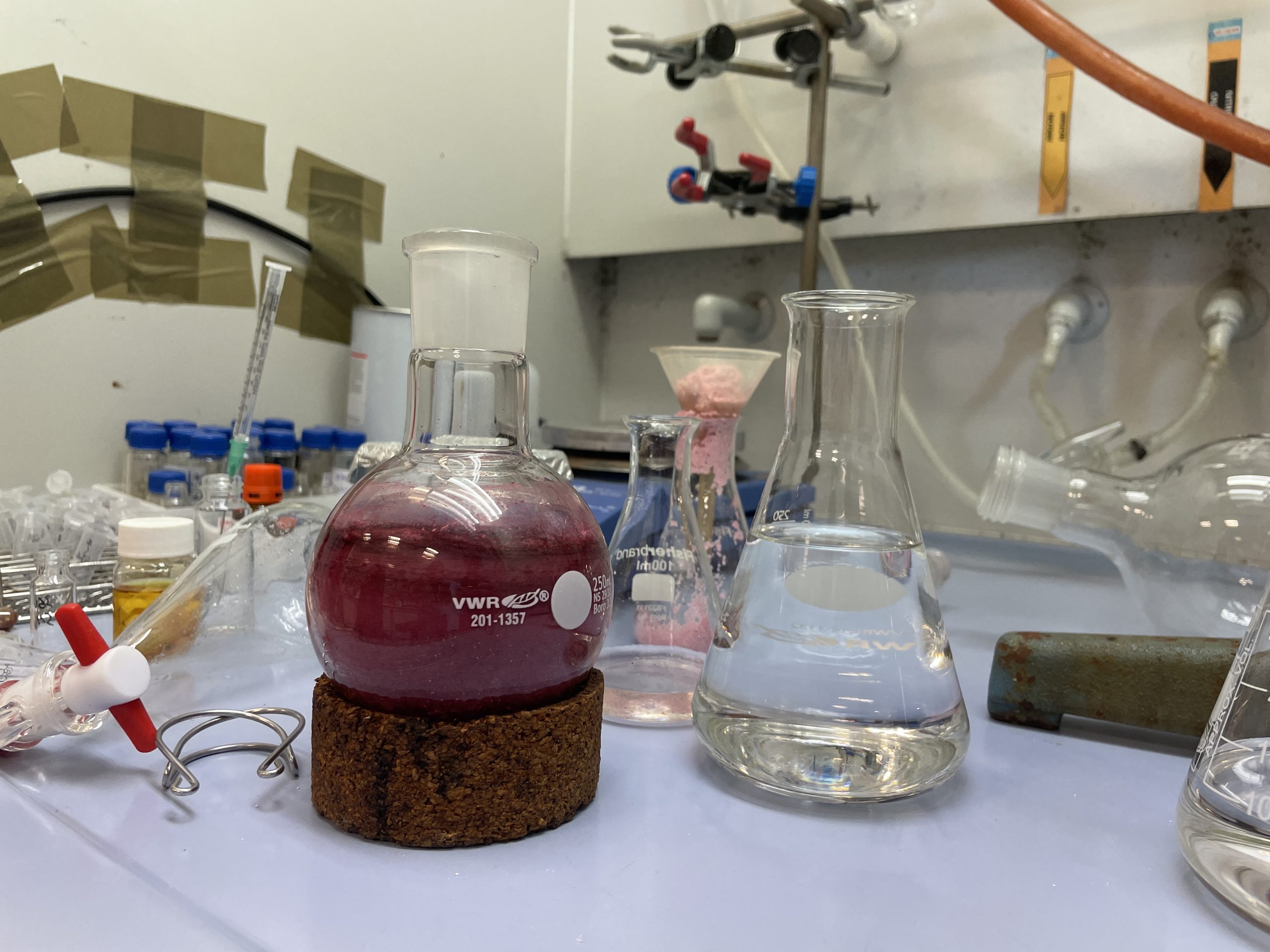
The Asymmetric Synthesis and Functional Nanosystems group is offering a four-year JAE PRE/MED pre-doctoral research fellowship.
PROJECT SUMMARY
Modern drug discovery requires researchers capable of integrating medicinal chemistry, artificial intelligence, nanotechnology and translational biology. The SENECA project offers a multidisciplinary pre-doctoral opportunity to participate in the entire drug discovery process, from the design and synthesis of new chemical entities to their biological validation and preclinical evaluation in haematological neoplasms. This process will be structured around iterative Design–Make–Test–Analyse (DMTA) cycles, in which AI-guided molecular design, chemical synthesis and experimental evaluation will continuously inform the optimisation of new drug candidates.
The project combines AI-assisted hit-to-lead optimisation, medicinal chemistry, supramolecular nanomedicine, omics-based target identification and translational oncology, within the framework of a collaboration between the Institute of Chemical Research (IIQ-CSIC), the Seville Institute of Biomedicine (IBiS) and the Haematology Department at the Virgen del Rocío University Hospital.
The successful candidate will work in a highly collaborative environment, supported by competitive national research projects, state-of-the-art scientific infrastructure and close collaboration between chemists, biologists and clinical researchers. The PhD programme will provide comprehensive training in modern drug discovery and contribute to the development of new therapeutic strategies for leukaemia and multiple myeloma.
PROFESSIONAL PROFILE
Minimum requirements:
A Master’s degree (or equivalent qualification granting access to a PhD programme) in Chemistry, Pharmacy, Biotechnology or related disciplines. A strong academic record. A good command of spoken and written English. A strong motivation for interdisciplinary biomedical research. Must meet the admission requirements for a PhD programme prior to signing the contract.
Other desirable qualities:
Experience in organic synthesis or medicinal chemistry. Knowledge of analytical techniques (NMR, HPLC, LC-MS, etc.). Experience in molecular or cellular biology. Experience in molecular modelling, cheminformatics or artificial intelligence. Previous experience in nanomedicine or drug discovery. Ability to communicate and work within multidisciplinary teams.
WHAT IS ON OFFER
The successful candidate will receive multidisciplinary doctoral training covering the entire drug discovery process, including medicinal chemistry, AI-assisted molecular design, nanomedicine, molecular pharmacology and translational oncology. They will work at the interface between chemistry, nanomedicine, artificial intelligence and translational medicine, integrating these disciplines throughout the various stages of the drug discovery process.
The PhD research will be carried out in a collaborative environment involving IIQ-CSIC, IBiS and the Virgen del Rocío University Hospital, with access to state-of-the-art facilities for chemical synthesis, advanced molecular characterisation, nanomaterial characterisation, cell biology, omics technologies and preclinical evaluation.
The successful candidate will receive close supervision from highly experienced researchers, regular scientific mentoring, the opportunity to participate in national and international conferences, opportunities for scientific publication, technology transfer and patent protection, international collaborations and complementary training activities offered by the University of Seville’s PhD Programme in Chemistry.
Progress will be monitored through regular meetings, annual assessments and personalised training plans, ensuring continuous scientific and professional development throughout the doctoral thesis.
Contract terms:
JAE PRE/MED: A 4-year pre-doctoral contract. Gross annual salary of €32,565.71 (including social security contributions).
Start date: before 15 December 2026
CONTACT DETAILS OF THE PRINCIPAL INVESTIGATOR
Email:
The Faculty of Chemistry pays tribute to Prof. Ernesto Carmona by naming its Great Hall after him.
The Faculty of Chemistry at the University of Seville will honor Professor Ernesto Carmona with a ceremony during which its Aula Magna will be renamed in his honor, in recognition of his exemplary scientific career and his significant contributions to the field of organometallic chemistry. The event will take place on September 24 at 7:00 p.m. in the Aula Magna of the Faculty of Chemistry at the University of Seville.
Carmona, a professor of inorganic chemistry at the University of Seville since 1984, has also maintained close ties with the Institute for Chemical Research (IIQ), a joint center of the University of Seville and the Spanish National Research Council (CSIC), of which he was one of the founders.
After completing his studies at the University of Seville, he undertook a postdoctoral fellowship from 1974 to 1977 at Imperial College of Science and Technology in London, where he began studying organometallic compounds under the supervision of Professor Sir Geoffrey Wilkinson, winner of the 1973 Nobel Prize in Chemistry. Upon completing this phase, he returned to the University of Seville, where he has since built an outstanding academic and research career.
His scientific work has focused primarily on the chemistry of coordination and organometallic compounds and on homogeneous catalysis, fields in which he has made highly significant contributions. Throughout his career, he has supervised approximately 40 doctoral dissertations and published more than 250 scientific articles in specialized journals. He has also served as a speaker at numerous national and international conferences and scientific meetings, in addition to delivering scientific and popular science seminars and lectures at universities and research centers in Spain and abroad.
Ernesto Carmona has received numerous awards throughout his career, including the King Jaime I Prize for Basic Research (2010), the Gold Medal from the Southern Chemists’ Association (2018), and the European Prize for Organometallic Chemistry (2019). He is also a member of the Royal Academy of Exact, Physical, and Natural Sciences.
The Southern Chemists’ Association is organizing a visit with Prof. Morten P. Meldal, 2022 Nobel Prize laureate in Chemistry
On October 16, the Isla de La Cartuja Scientific Research Center will have the privilege of welcoming Professor Morten P. Meldal, winner of the 2022 Nobel Prize in Chemistry for his contributions to the development of click chemistry and bioorthogonal chemistry.
Morten Meldal is a Danish chemist and professor in the Department of Chemistry at the University of Copenhagen, Denmark. He studied at the Technical University of Denmark, where he earned a master’s degree in chemical engineering and received his Ph.D. under the supervision of Klaus Bock. His work focused on the synthesis of carbohydrates. After a postdoctoral fellowship at the University of Cambridge and a stint as a professor at the Carlsberg Research Laboratory, he joined the University of Copenhagen in 2011. It was there that he had the opportunity to lead the CECB research center, which specializes in peptide and combinatorial chemistry.
His work has contributed to the development of new peptide synthesis techniques and the CuAAC reaction—known as click chemistry—which are now widely used in bioorganic and organic research. Click chemistry allows molecules to be joined quickly, efficiently, specifically, and selectively to create more complex structures. Its name refers to the sound produced when two perfectly fitting pieces are joined together, such as a belt or two Lego blocks.
Similarly, if two molecules have the appropriate functional groups, they can bond in a simple, robust, and efficient manner, producing the characteristic “click” reaction and preventing the formation of byproducts.
Visit to cicCartuja
During his visit to the IIQ, Professor Meldal will participate in a meeting with students and young researchers, an exceptional opportunity to learn about the career and scientific work of one of the most prominent researchers in the field of chemistry. The event will also provide an opportunity to hear firsthand about his experience as a researcher and to share questions and concerns with him about chemical research and its applications.
Program
13.00 – 13.15h Arrival of Prof. Morten Meldal. Reception by board of Directors
13.15 – 13:30h Outline of the mission and vision of cicCartuja by Directors
Research at IIQ, ICMSE, and IBVF
13.30 – 14.30h Meeting with early-stage researchers (R&C, post-doctoral, pre-doctoral fellows).
The session will consist on an interview in which young scientist will ask Prof. Morten Meldal on his personal view on undertaking the challenge of pursuing a career in scientific research nowadays.
14.30 – 15.30h Altogether cocktail lunch at cicCartuja
Registration
Space to participate in the event is limited. Students interested in attending can register using the registration form until capacity is reached or by the deadline of October 10.
This is a unique opportunity for the student community to meet and talk with a Nobel Laureate in Chemistry.
María José Puerto Madorrán defends her doctoral thesis at cicCartuja
Nucleic acids (such as DNA or RNA) have great potential as therapeutic agents, but they are very fragile and degrade easily within the body. It is therefore necessary to develop delivery systems capable of protecting them and transporting them safely to the target cells.
To better control when and where these systems act, light-sensitive strategies have been developed. Some of these incorporate molecular ‘switches’ that respond to light, allowing the release of genetic material to be precisely triggered. This thesis utilises azobenzene, a molecule capable of reversibly changing its shape when irradiated with different wavelengths of light.
This thesis explores the use of light to control these systems. Three DNA vector systems have been developed that undergo light-induced structural changes, altering their organisation and function in vitro and in biological models. Two of these systems are based on a molecular strategy, in which the vector itself incorporates the azobenzene switch. The third utilises a supramolecular strategy based on host–guest recognition between cyclodextrin and azobenzene, enabling the assembly and disassembly of the system to be controlled by light.
Jesús Campos, the new president of the RSEQ’s Specialised Group on Organometallic Chemistry (GEQO)
Jesús Campos, researcher at the IIQ – CSIC Andalucía
Jesús Campos, a researcher at the Institute of Chemical Research (IIQ), has been elected president of the Specialised Group on Organometallic Chemistry (GEQO) of the Royal Spanish Society of Chemistry (RSEQ).
With this appointment, Jesús Campos becomes the second researcher at the IIQ to chair a specialist group within the RSEQ. Jesús Angulo currently chairs the Magnetic Resonance Specialist Group (GERM), which highlights the IIQ’s prominent role in the field of chemistry.
Jesús Campos graduated with a degree in Chemistry from the University of Seville in 2007 and completed his master’s degree at the University of Manchester. He obtained his PhD in Organometallic Chemistry under the supervision of Professor Ernesto Carmona, during which time he undertook a research placement with Professor Maurice Brookhart’s group at the University of North Carolina (United States), and also completed a Master’s degree in Crystallography at the Menéndez Pelayo International University. He has worked as a postdoctoral researcher in the groups led by Prof. Robert H. Crabtree (Yale, USA) in the field of sustainable catalysis and by Prof. Simon Aldridge (Oxford, UK) in main-group chemistry.
In 2016, he returned to Seville as a researcher on the Talentia programme and was awarded a Marie Skłodowska-Curie Individual Fellowship. Two years later, he joined the Institute of Chemical Research (IIQ) as a Senior Researcher at the CSIC, and was promoted to Research Scientist in 2022. Since joining the CSIC, he has pursued an independent research career, focusing in particular on the development of cooperative molecular systems for bond activation and catalysis, with an emphasis on bimetallic systems. He has secured national and European funding, including two ERC projects (Starting Grant, 2017, and Consolidator Grant, 2024), BBVA Leonardo, Ramón Areces, MSCA projects, etc.
His research career has been recognised with several awards, including the María Teresa Toral National Young Researcher Award, the RSEQ and GEQO Awards for Excellence in Research, the Lilly/RSEQ Young Researchers’ Award and the Organometallics Distinguished Author Award.
An international team has uncovered a paradoxical effect in a therapeutic target for age-related diseases
Researchers from the Biointeractomics group | Diario de Sevilla – José Ángel García
A team of researchers, led by Pablo de Olavide University, has identified an unexpected inflammatory mechanism that helps to explain how certain interventions targeting inflammation could have counterproductive effects if they do not take into account the interaction between different pathways of the immune system.
The study, led by Dr Mario D. Cordero and published in the journal *Science Advances* under the title ‘NLRP3 haploinsufficiency unmasks a compensatory NLRP1-NLRP3 interaction that drives accelerated ageing in mice’, demonstrates that a partial reduction in the NLRP3 inflammasome—a therapeutic target of great interest in age-related diseases—can trigger a compensatory response that accelerates ageing in animal models.
The NLRP3 inflammasome is a protein complex that acts as a danger sensor within cells and plays a role in triggering the inflammatory response. Its uncontrolled activity has been linked to chronic inflammatory processes and to cardiovascular, metabolic and neurodegenerative diseases, such as Alzheimer’s. It is therefore considered one of the main targets for the development of anti-inflammatory treatments.
However, the new study shows that partially inhibiting NLRP3 does not always reduce inflammation as one might expect. In haploinsufficiency models — that is, models with a partial reduction in the expression of this protein — the researchers observed that the cells trigger a compensatory response by overexpressing another inflammasome, NLRP1.
La investigación revela que NLRP1 y NLRP3 pueden interactuar directamente y formar un complejo híbrido NLRP1–NLRP3. Esta interacción activa de forma excesiva la respuesta inflamatoria, especialmente a través de moléculas como IL-18, y favorece un estado de inflamación crónica asociada al envejecimiento, conocido como inflammaging.
In the animal models studied, this process resulted in signs of accelerated ageing, including progressive physical deterioration, loss of body mass, metabolic abnormalities, alopecia, kyphosis, corneal opacity and reduced fertility. Internal damage consistent with systemic inflammation was also observed, such as hepatic steatosis and macrophage infiltration in the heart.
“In recent years, the pharmaceutical industry has focused on developing specific NLRP3 inhibitors. Our study aims to rethink strategies for inhibiting inflammasomes from a more integrated perspective; inflammasomes do not act alone, so we should seek more ambitious strategies to avoid future undesirable effects,” says Mario David Cordero.
Simultaneous inhibition of NLRP1 and NLRP3
One of the most significant findings of the study is that the simultaneous inhibition of NLRP1 and NLRP3 was more effective at reducing inflammation and improving parameters associated with ageing in the animals. These results suggest that future anti-inflammatory therapies may require more complex strategies than simply blocking a single molecular target.
The finding has significant implications for translational medicine. Given that NLRP3 is being investigated as a potential therapeutic target in age-related diseases, the authors caution that the long-term effects of its partial inhibition must be carefully assessed, particularly in chronic conditions. In interconnected biological systems, blocking a single pathway can trigger compensatory mechanisms with unintended consequences.
In this vein, the research team is already working on the development of dual-inhibition strategies targeting various inflammasomes. According to the authors, these approaches have so far proved highly effective in preventing complications associated with inflammaging and may improve the safety of future treatments for chronic inflammatory diseases.
The study opens up new avenues of research focused on the study of interactions between inflammasomes, which until now have largely been regarded as independent systems. It also highlights the need to explore in greater depth the role of NLRP1 in age-related diseases, including neurodegenerative, cardiovascular and metabolic conditions.
Taken together, the results point to a more complex view of the inflammatory system and highlight the importance of designing therapies that take into account the plasticity and compensatory capacity between different inflammatory pathways.
Reference:
Inés Muela-Zarzuela et al., NLRP3 haploinsufficiency unmasks a compensatory NLRP1-NLRP3 interaction that drives accelerated aging in mice. Sci. Adv.12, eaec9499(2026). DOI: 10.1126/sciadv.aec9499 .